
The Gift of Obedience Is Endurance
by Ellen Blasing on June 01, 2026
Foster parent Ellen Blasing shares an honest look at the realities of foster care.
This may sound harsh, but when I hear about people who quit foster parenting because it was “too hard,” I feel frustrated. And then almost immediately, I feel guilty for feeling that way, because the truth is—they’re right. Foster parenting is hard. It is harder than I ever imagined, and I say that as someone who felt called to it long before I even understood what it truly meant.
I have wanted to foster since I was nine years old. I remember reading a mystery series as a little girl that included a foster child, and something about the story settled deep in my heart. I couldn’t have explained it then, but I could feel the ache in it—the tension of a child never fully knowing where they belonged. Even at that age, I think God was planting something in me.
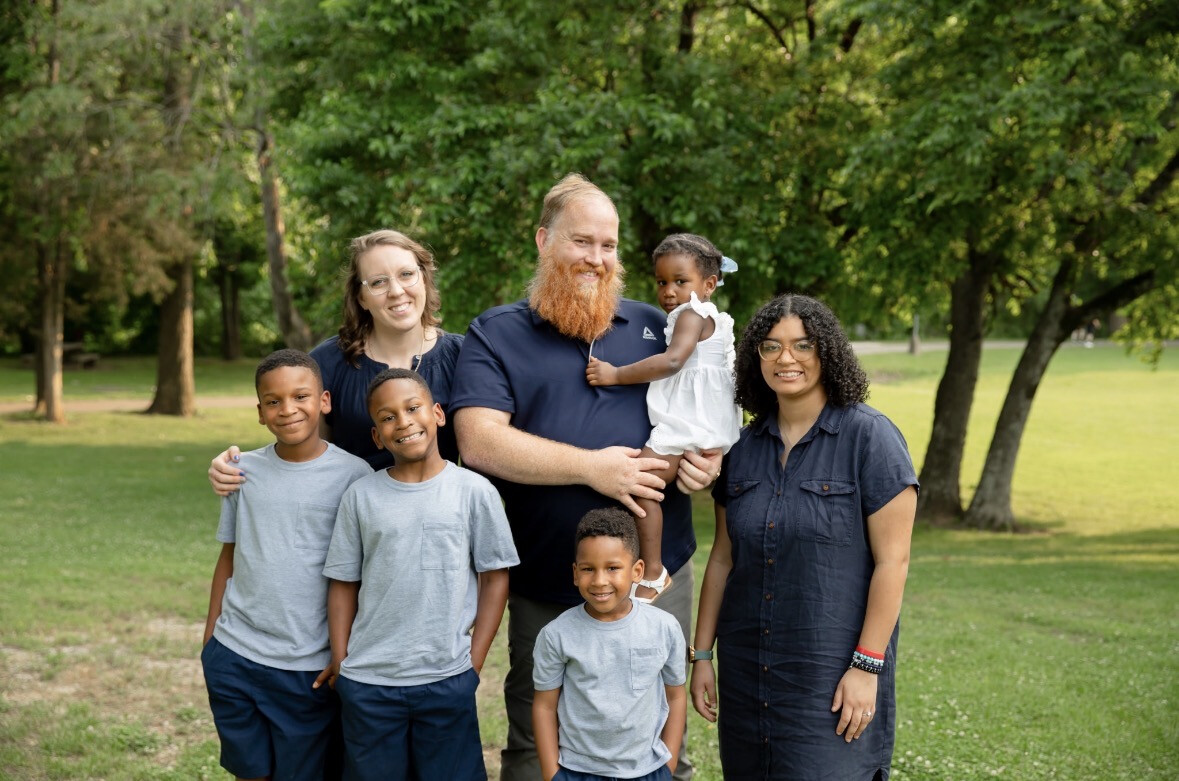
Years later, when I started dating the man who would become my husband, Jason, I warned him that fostering was likely part of the life I envisioned. What I didn’t understand at the time was how different reality would look from the picture I had in my head. I never planned on adoption. I certainly never imagined we would one day adopt five children, including four siblings and a teenage girl, while also fostering other children. I didn’t picture the chaos, the exhaustion, or the heartbreak that would come with it.
People often imagine foster parenting as this beautiful rescue story where hurting children arrive in your home and blossom because they’re finally loved well. But trauma isn’t that simple. Love alone cannot erase years of fear, neglect, instability, abuse, or abandonment. Children who have learned not to trust adults do not suddenly trust you because your intentions are good. Sometimes they scream at you. Sometimes they rage, withdraw, manipulate, or test every boundary you try to establish. Sometimes they reject the very love you are trying so desperately to offer.
Honestly, some days it breaks me.
There’s a line from The Five People You Meet in Heaven by Mitch Albom that says, “Youth, like pristine glass, absorbs the prints of its handlers. Some parents smudge, others crack, a few shatter childhoods completely into jagged little pieces.” Foster care places you directly in the middle of those shattered pieces. You don’t arrive into a child’s story at the beginning of the damage—you arrive in the aftermath.
Jason travels often for work in the music industry, so much of the daily responsibility falls on me. When he’s home, he is “the bedtime master.” He’s amazing. It allows me to step away, especially in those times I’m emotionally drained from the steady demands of parenting and quietly wondering whether I am failing all of them at once.
That’s why I struggle when people call foster parents saints. I’m not a saint. Jason isn’t a saint. We mess up constantly. We lose patience. There are days I feel overwhelmed and inadequate. We aren’t uniquely equipped for this life. We’re not more patient, more selfless, or more emotionally stable than anyone else. We are ordinary people with some space—and a lot of trust without certainty.
I believe the gift of obedience is endurance.
Because foster care forces you to confront painful truths about this world. Many of the children entering care are carrying profound trauma into your home, but often their biological parents are carrying trauma too. Addiction, abuse, neglect, instability—cycles that seem to repeat across generations. And honestly, that’s one of the hardest parts for me. I believe in reunification. I want families healed. I want parents restored. There have been moments where I’ve wrestled with God over this. Why doesn’t He step in and bring healing so these children can remain at home? Where are the miracles when they feel needed most?
I don’t have answers to those questions. We just keep showing up. We make dinner. We help with homework. We sit beside children in the middle of meltdowns. We hold boundaries. We rinse, repeat, and start again the next day. And somewhere in that repetition, something fragile begins to form—not trust all at once, not healing all at once, but the smallest possibility that not every adult will leave. That this home might still be here tomorrow. That, slowly, a child may begin to believe they are safe enough to exhale. That is the space we are living in.
Not saving. Not fixing. Staying.

Login To Leave Comment