
A Chance at Life. A Chance at Love.
by Curt Harding on June 29, 2026
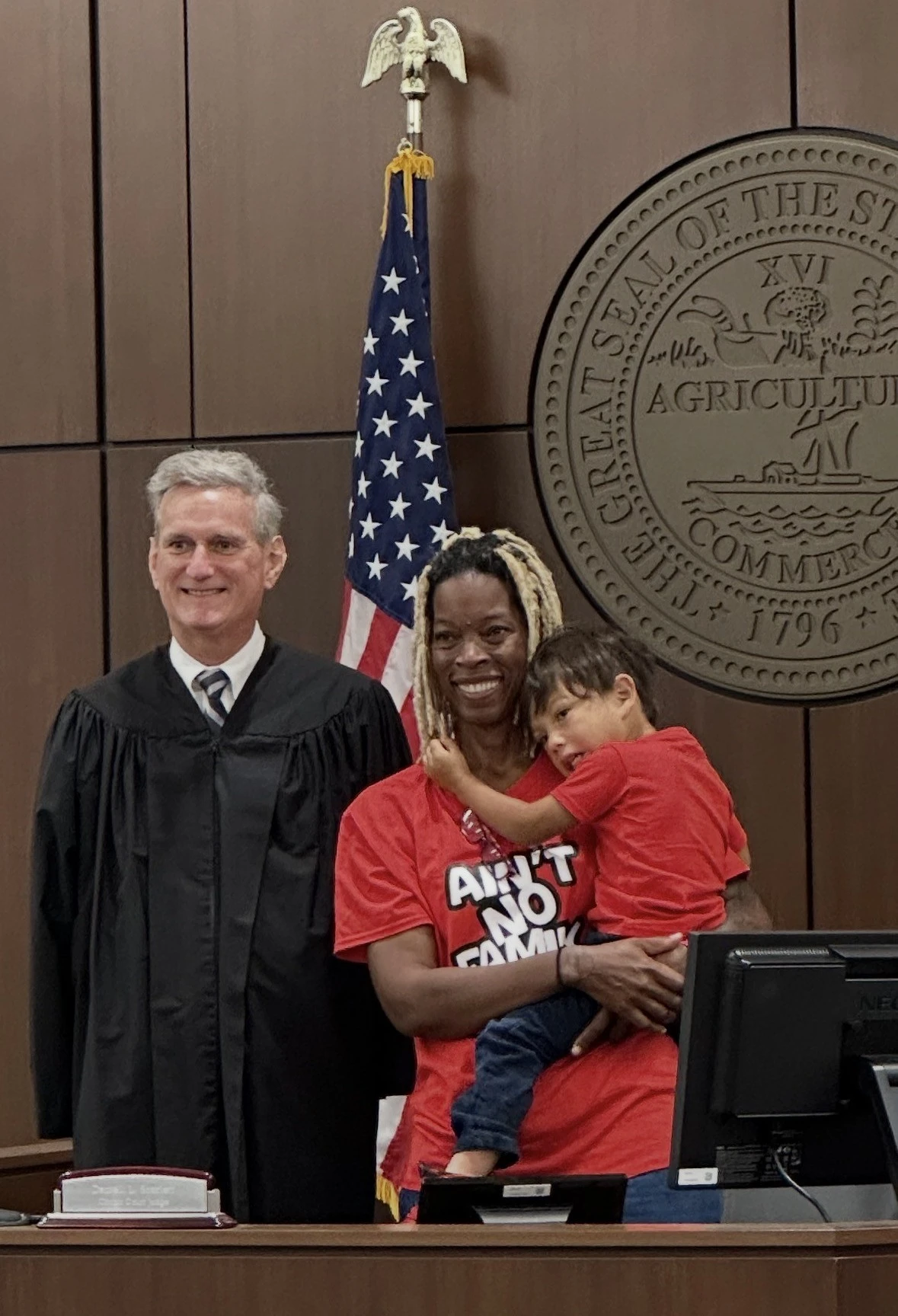
Recently in Circuit Court in Murfreesboro, Tennessee, something unfolded in Judge Darrell L. Scarlett’s courtroom that Kira Higgins never imagined: the adoption of three-year-old Ian. But that’s not where the story begins. That’s simply where I walked into it.
It begins with Ian’s mother. I’ll call her “Hannah.”
Hannah was 14 when she learned she was pregnant. Still a child herself, she suddenly carried a child and the weight of trauma no child should have to endure.
That’s where Kira stepped in. She became Hannah’s foster mom.
Kira grew up in North Carolina in a large family. “There was never a quiet moment,” she recalled. “My parents liked it that way. Aunts, uncles, cousins, neighborhood kids…you name it. I’d wake up and there would be people sleeping wherever they could find space.” Home, for her, was full. Loud. Alive. Cooking, chaos, conversation moving from room to room like music she didn’t realize she would one day miss.
After her divorce, she moved to Tennessee looking for a fresh start. Suddenly, life became quiet. It was just her, her ten-year-old son, and a three-bedroom house with a big bonus room.
The sound of silence.
Kira had long felt drawn to fostering. It was something she and her former husband never shared. After settling in, she and her son talked it through and decided to move forward. A new job. A new school. A new life. And with it, a new calling: opening their home to children in need. Especially teen mothers. Because Kira understood something of that world too—she had a daughter at 18.
She welcomed one teen mother, then another, and then Hannah. Soon, the house that had once felt too quiet was over capacity—eight people under one roof.
“I’m all about the ‘yes,’” she said, laughing. “I have to work on that.”
That “yes” brought Hannah into their home.
Hannah’s life had been shaped by trauma, and over time it began to surface in painful ways. When Ian was born, she and Kira cared for him together, sharing the work of feeding, changing, bathing, and soothing him through sleepless nights. Their days settled into a rhythm of exhaustion and routine.
But the stability didn’t last.
As Hannah struggled with the weight of her past, she began engaging in increasingly destructive behavior. The situation grew more unstable until the state intervened and removed Ian from her care. Hannah moved out. And when the door closed behind her, it seemed another chapter of loss had begun.
But love had another idea.
Kira sought counseling. “I felt like I failed her,” she said. Soon after, she and Hannah began family counseling, where hard truths were spoken aloud. Slowly, they began to build something new.
Then, one day, something shifted.
“Hannah never said ‘I love you,’” Kira said. “Her trauma was too great. But one day, she did. I heard it, and it changed everything.”
Today, Hannah is still navigating a difficult path. She is not in a place to parent Ian on her own, but she still loves him deeply, and she knows there's only one place for him: with Kira. “Anyone who would judge her simply doesn’t know her story,” Kira said. “She is doing what’s best for him. She didn’t want him placed with a stranger.”
She also asked to remain in his life. Kira agreed, with one condition: Hannah must stay clean and sober. They would not walk this alone. They would do it as a team. Ian is still her son, even as Kira becomes his legal mother.
So, I found myself in a courtroom. Watching as Kira raised her right hand. Ian wrapped his small arms around her neck. Around them sat a full courtroom—family members filling every bench, some traveling from North Carolina—wearing red shirts that read, “AIN’T NO FAMILY LIKE THE ONE I GOT.”
Later, I asked Kira if she could have ever imagined this when she first said yes to fostering. She laughed. “You get in deep,” she said. “And there’s no place I’d rather be.”
Her faith is strong. She often returns to Jeremiah 29:11: “My hope is always in the Lord.” It’s a promise she holds close, and one she hopes her life can reflect, so others might find that same hope in their own stories.
Ian’s story was never just about how it started. It was about what is being built around him—a chance at life and a chance at love.


Login To Leave Comment